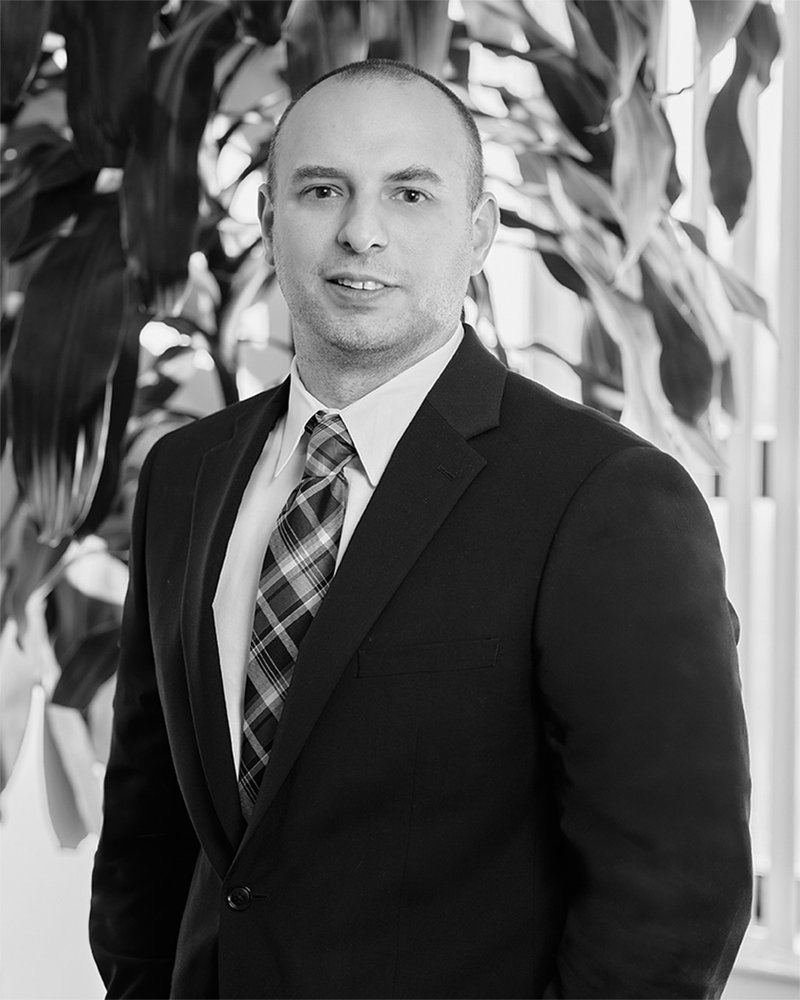
Attorneys on the Case
The attorneys
behind the win.
James Tierney, Maria Garber and Steven Amshen of Petroff Amshen LLP represented our client in the Appellate Division, Second Department.
Facing foreclosure? Petroff Amshen LLP is a New York consumer rights and foreclosure defense law firm. We find the defense in your file and take it to court.
Free case review. Confidential. Representation is by application.
Quick AnswerOn October 21, 2026, the Appellate Division, Second Department unanimously affirmed an order of the Supreme Court, Kings County that denied a motion by Fannie Mae (Federal National Mortgage Association) to vacate the 2014 dismissal of its 2009 foreclosure against Petroff Amshen's client and restore the case to the active calendar. A later foreclosure on the same mortgage debt, filed in 2018 by MTGLQ Investors, L.P., the company that took over the loan, had been dismissed as time-barred in 2022. Under RPAPL 1301(4), the court held, that ruling also made the 2009 case "barred by the statute of limitations." It rejected Fannie Mae's challenges to the Foreclosure Abuse Prevention Act and awarded costs to our client.
In December 2009, Fannie Mae sued our client to foreclose a consolidated mortgage on a property in Brooklyn.
Then the case went quiet. New York law lets a court dismiss a foreclosure as abandoned when the lender doesn't move it forward, and on February 25, 2014, the court did exactly that.
In October 2018, MTGLQ, which had taken over the loan from Fannie Mae, filed a second foreclosure on the same mortgage. That one didn't last either. On May 24, 2022, the court granted our client summary judgment and dismissed the 2018 case as time-barred.
Time-barred means the case was filed too late. In New York, a lender generally has six years to foreclose once the whole loan has been called due, and a case filed after that window can't go forward.
With the 2018 case gone, Fannie Mae went looking for another way in. In November 2023, it asked the court to undo the 2014 dismissal and put the original 2009 case back on the active calendar.
If the old case could be restored, Fannie Mae would be back in court on the same loan.
Our client opposed the motion. On May 22, 2024, Justice Lawrence Knipel of the Supreme Court, Kings County denied it. Fannie Mae then took the fight to the Appellate Division.
The answer came from a short section of New York's foreclosure statute, RPAPL 1301(4). It says that once a court rules one foreclosure on a mortgage is barred by the statute of limitations, any other action to foreclose that mortgage or collect that debt is barred too.
That settled it. The 2009 case and the 2018 case were after the same mortgage debt. The 2018 case had already been ruled time-barred. So the court held the 2009 case was barred as well, and that the trial court "properly denied" the motion to restore it.
Fannie Mae also attacked the Foreclosure Abuse Prevention Act, the 2022 law that closed many of the loopholes lenders used to stretch the six-year deadline. It argued the law couldn't be applied to older loans and was unconstitutional. The court rejected both arguments, relying on the Court of Appeals' recent rulings upholding the law.
The panel was unanimous. Justices Genovesi, Warhit, Golia and Hom all joined the decision, and the court awarded costs to our client.
Both lawsuits "sought to foreclose the same mortgage debt," the Appellate Division wrote.
The record, in order: what the law gives a lender, what decided this appeal, and what the court held on each argument.
RPAPL 1301(4) says that if a foreclosure "is adjudicated to be barred by the applicable statute of limitations, any other action seeking to foreclose the mortgage or recover any part of the same mortgage debt shall also be barred." The 2018 case had been ruled time-barred, so the 2009 case was barred too.
The 2009 case had been dismissed as abandoned in 2014. When Fannie Mae asked in 2023 to undo that dismissal, the trial court said no, and the Appellate Division held it "properly denied" the motion.
Fannie Mae argued that the Foreclosure Abuse Prevention Act could not apply to older loans and was unconstitutional. The Appellate Division held those arguments were "without merit."
In our experience, lenders with an old loan often have more than one foreclosure in the file, and some of those cases were dismissed years ago and forgotten. When a newer case fails, an old one can look like a second chance.
This decision closes that door. Once one foreclosure on your mortgage is ruled too late, whoever holds the loan may not dust off an older case on the same debt and start again.
It also shows how far a time-bar win reaches. The ruling ends more than the case in front of the court. Under RPAPL 1301(4), it protects the borrower against every other foreclosure on the same debt, including one that was filed years earlier and later dismissed.
If you've won a statute of limitations dismissal and the lender is now trying to restore an earlier case, or file a new one, call us. James Tierney, Maria Garber and Steven Amshen handled this appeal.
James Tierney, Maria Garber and Steven Amshen of Petroff Amshen LLP represented our client in the Appellate Division, Second Department.
I could not recommend a better group than Petroff Amshen. If you find yourself in a situation that requires the assistance of attorneys, this is the firm.
After years of battling in court, thousands of dollars in legal fees, and quite a few subpar attorneys, we found Petroff and Amshen, who delivered winning results. They're incredibly easy to talk to, making the whole legal process feel less intimidating.
An effective firm with a minimum of fuss. When you need attorneys who actually do the work, you need these guys on your side.
Petroff Amshen does not take every case. Submit the application and a licensed New York attorney will review the matter directly. The case review is free and confidential.